
Are Natural Stone Countertops Worth It In 2026? A Guide!
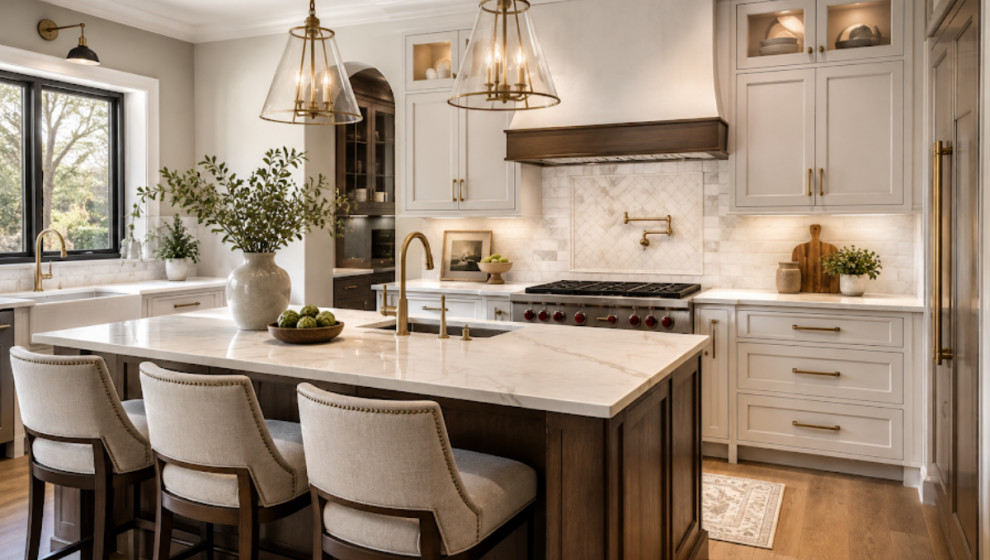
Natural stone countertops remain a strong luxury choice in 2026 when material selection matches your lifestyle. Marble offers unmatched character but needs more care. Quartzite combines natural beauty with strength, while granite remains highly durable. Engineered quartz and porcelain offer easier maintenance and consistent performance, making thoughtful material selection essential for lasting kitchen design.
Natural stone is having a stronger design moment in 2026, but the smartest luxury kitchens are choosing stone for performance, not fashion alone. For kitchen renovation Illinois homeowners, the right surface should suit your cooking habits, maintenance style, and the story of your home.
So, Are Natural Stone Countertops Worth It in 2026?
Yes, if you choose the stone for your lifestyle rather than its showroom appeal. Marble, quartzite, and granite offer depth, character, and longevity that manufactured surfaces cannot always reproduce. But each behaves differently.
That distinction matters. A beautiful countertop can become frustrating if it cannot handle your family's routines. The reverse is also true. A practical surface can feel uninspiring when it does not belong to the architecture around it.
Natural stone remains especially compelling in 2026 because designers are moving toward warmer tones, expressive veining, tactile finishes, and materials that feel individual rather than mass-produced.
For a custom kitchen, that shift is welcome. Your countertop does not need to look perfect forever. It needs to age in a way you can appreciate.
Marble: The Beauty That Learns Your Story
Marble remains the romantic choice. Its veining is naturally irregular, so no two slabs create exactly the same visual rhythm. That makes a marble island feel more like a piece of architecture than a simple work surface.
There is a trade-off. Marble is calcium-carbonate based and can react with acids found in lemon juice, tomatoes, and vinegar. Those reactions may create etching, while everyday utensils can scratch softer
varieties.
So, should you avoid marble? Not necessarily. If you appreciate natural patina, marble can become more beautiful as life leaves subtle traces. If you need a permanently pristine surface, another material may give you greater peace.
Heat is another consideration. Marble generally handles normal kitchen temperatures well, but sudden thermal changes can stress natural stone. Trivets remain a sensible habit, especially around
cooking zones.
Quartzite: Natural Drama With Serious Strength
If you love marble's movement but want greater resistance to scratching and daily wear, quartzite deserves a close look. It is a natural metamorphic stone formed from sandstone and can offer exceptional strength, density, and hardness.
Quartzite works beautifully for busy family kitchens because it combines visual drama with strong everyday performance. Its mineral structure also makes many varieties more resistant to common kitchen acids than calcareous stones.
The catch is simple: not every slab marketed as quartzite performs identically. Stone names can be commercially complicated, and appearance alone does not tell you everything about performance. Ask your fabricator about the specific slab.
That extra question can prevent an expensive mistake. For a high-end renovation, you are not simply buying a color. You are choosing how that material will behave for years.
Granite: The Reliable Classic Still Has a Place
Granite may feel familiar, but familiar does not mean outdated. It remains one of the strongest choices for heavily used kitchens, especially where durability matters as much as appearance.
The Natural Stone Institute describes granite as highly durable and resistant to abrasion and scratching. Many granites also offer strong heat resistance, although direct, intense heat should still be
avoided because thermal stress can cause cracking.
Granite also gives you remarkable variety. Deep charcoal, warm taupe, creamy neutrals, dramatic blacks, and intricate mineral patterns can all work beautifully in a tailored interior.
Maintenance depends on the particular stone. Some granite benefits from an impregnating treatment, while many varieties are naturally quite resistant to staining. A qualified stone professional can
recommend the right care instead of treating every slab the same way.
EngineeredAlternatives: When Practicality Wins
Natural stone is not automatically the superior choice. Engineered quartz and porcelain can make excellent sense when your priority is consistent appearance, easy cleaning, and predictable performance.
Engineered quartz is highly nonporous and generally simple to maintain. However, it is heat-resistant rather than heat-proof, so hot cookware should sit on a trivet rather than directly on the
surface.
Porcelain brings another advantage. Some porcelain countertop systems can tolerate cookware straight from an oven or cooktop, although prolonged heat exposure still calls for protection.
This makes engineered materials attractive for households that want a refined surface without a demanding care routine. They can also suit commercial spaces where consistency and easy maintenance are major priorities.
Marble vs Quartzite vs Granite vs Engineered Surfaces
If you want expressive veining and accept visible ageing, marble is a beautiful choice. If you want natural movement with stronger everyday performance, quartzite may be the better fit.
Choose granite when durability, heat resistance, and longevity are central to your decision. Choose engineered quartz when low maintenance and consistent design matter more than natural
variation.
Porcelain deserves attention when heat resistance, low maintenance, and a contemporary aesthetic are high on your list. The best material is the one that solves your actual problem.
What Happens When the Kitchen Works Hard?
A high-use kitchen changes the decision. A family that cooks three meals daily needs a different surface from a household that mainly entertains on weekends.
Commercial kitchens demand even more discipline. Heavy use, frequent cleaning, heat, spills, sharp tools, and operational pressure can expose weaknesses quickly. Material selection should
therefore begin with function before moving toward colour and pattern.
This is where a thoughtful kitchen renovation experts Illinois approach can add real value. The surface should work with cabinetry, lighting, hardware, flooring, traffic patterns, and the way you actually use the room.
The Secret Is Not the Stone. It Is the Selection.
Two kitchens can use the same marble and feel completely different. Slab movement, edge profile, backsplash placement,lighting, cabinet proportions, and island scale change how the stone reads.
That is why a countertop should never be selected from a tiny sample alone. View the actual slab whenever possible. Study it under natural and artificial light. Look for movement, fissures, colour shifts, and areas that will land beneath sinks or cooktops.
Think about the edges, too. A sculpted profile can make a classic stone feel formal, while a simple eased edge keeps the composition quiet and modern. Small decisions can completely change the final
impression.
How Should Your Countertop Age?
This may be the most overlooked question. Ask yourself whether you want the surface to remain visually uniform or develop character.
Natural stone can show the passage of time.Marble may develop a soft patina. Granite can retain its polished character for years with sensible care. Quartzite can offer a balance between natural variation and strong daily performance.
Engineered materials generally give you greater consistency, but they can also make ageing feel less organic. Neither choice is wrong. You are choosing a different relationship with time.
The Luxury Is in Getting the Details Right
A successful renovation does not begin with a countertop catalogue. It begins with you. Your routines, entertaining habits, design preferences, family needs, and long-term plans should shape every
material decision.
At JGIB Interiors, the process begins with consultation, moves through concept and detailed design, then continues into build and installation oversight. The studio works across residential and commercial interiors, creating spaces that are personal rather than formulaic.
That full-service involvement matters because material decisions rarely exist in isolation. A countertop affects the backsplash. The backsplash affects lighting. Lighting changes how the stone looks. Suddenly, one slab has influenced half the room.
For kitchen renovation Illinois homeowners, that connected thinking can make the difference between a kitchenthat simply looks expensive and one that feels genuinely considered.
Final Verdict: Is Natural Stone Still Worth It?
Natural stone is worth it when its character, performance, and ageing profile match the way you live. Marble rewards acceptance of patina, quartzite offers strength with natural drama, and granite remains a dependable workhorse.
Engineered quartz and porcelain can be smarter when low maintenance, consistency, or specific performance needs lead the brief. The most luxurious choice is not necessarily the rarest slab. It is the
one selected thoughtfully for your space.
At JGib Interiors, Jennifer Gibson and our team create personalized, story-driven interiors from concept through completion, and our portfolio-led website helps you explore our work, process,
and services; call 847-232-6795 or email jgibinteriors@gmail.com to begin.
FAQs About Natural Stone Countertops in 2026
1. Is quartzite better than marble for a busy kitchen?
Quartzite is usually better suited to heavy daily use because it offers greater hardness and strength, while marble is more vulnerable to scratching and acid etching.
2. Does natural stone need regular sealing?
Some natural stones benefit from impregnating treatments, but sealing does not make stone completely stain-proof. Your supplier should recommend care for the specific slab.
3. Can you put hot pans on natural stone?
Many natural stones tolerate kitchen heat, but sudden or intense localized heat can cause thermal stress. Using trivets is a simple, sensible precaution.
4. Is engineered quartz easier to maintain than marble?
Yes. Engineered quartz is highly nonporous and generally requires simple daily cleaning, while marble needs more care because acids can etch its surface.
5. What countertop is best for a luxury family kitchen?
Quartzite is often a strong middle ground, offering natural variation and excellent durability. Granite, marble, quartz, and porcelain can also work when matched carefully to your lifestyle.